To: the world bank, asian infrastructure investment bank
Providing financial support only to sustainable road construction in developing countries
No longer provide financial support to unsustainable road construction projects in developing countries. Unsustainable road projects are projects that:
* go straight through areas with much biodiversity/trees/, ... and/or are located in areas that are expected to have a decline in population numbers as people there are moving towards (nearby) larger cities
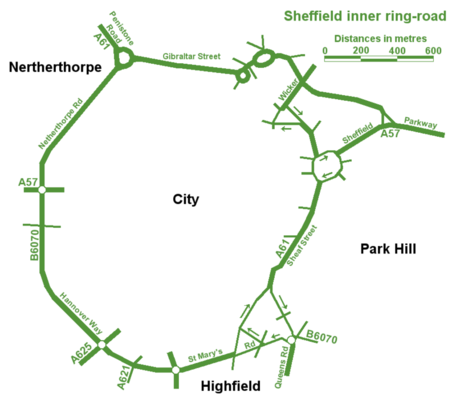
* any projects that do not seperate the traffic on freeways from other traffic on other roads ( i.e. vulnerable road users/inner-city traffic) -for example by using ring roads, ...-, and/or are obstructive in the effort of making cities car-free -for example by not making seperate bicycle lanes, ...-
Make a website detailing all projects to which the world bank has provided financial support to (categorised per country), so people can verify that the world bank is indeed supporting sustainable road construction from now on.
* go straight through areas with much biodiversity/trees/, ... and/or are located in areas that are expected to have a decline in population numbers as people there are moving towards (nearby) larger cities
* any projects that do not seperate the traffic on freeways from other traffic on other roads ( i.e. vulnerable road users/inner-city traffic) -for example by using ring roads, ...-, and/or are obstructive in the effort of making cities car-free -for example by not making seperate bicycle lanes, ...-
Make a website detailing all projects to which the world bank has provided financial support to (categorised per country), so people can verify that the world bank is indeed supporting sustainable road construction from now on.
Why is this important?
At the moment, the world bank supports many road construction projects, even projects that require the destruction of (a portion of the) biodiversity hotspots/destruction of trees (which we can not afford to lose, since they help clean our air and absorb co²). Also still eligable for financial support are road construction projects that are obstructive in the effort of making cities car-free, and which endanger vulnerable road users.
In some countries/cities, such new (unregulated) road construction projects have contributed to large-scale destruction of (rain)forest; a case in point is the Trans-amazonian highway in Brazil which required the logging of a huge amount of trees, and also has a significant negative impact on the local biodiversity. Besides the highway, it also begins to link more and more villages (which sometimes consist of houses -build in a non-permanent way-) near the highway. This linking means that roads (which used to be dirt roads, and which were best kept as dirt roads) are now paved, and the small "towns" (which might have been abandoned after a while otherwise) then become permanent, hence bringing a permanent negative impact on the fauna and flora.
Another case in point highlighting the other negative aspect mentioned of unregulated road construction (namely the rise of injuries and fatal accidents) is Vientiane, Laos. See http://www.aljazeera.com/programmes/101east/2015/02/laos-saviours-street-150224113903257.html
Numerous other similar cities have seen similar rising fatality numbers.
Finally, if we look at it purely from an economical standpoint (so besides the ecological and humanitarian problems), it also makes no sense to not immediatelly make proper roads (hence leapfrogging those transport-related problems). This because an increase in fatalities and injured people leads to a reduction of the economy. Also, the roads will need to be re-made then any way later-on, similar to the changes we had to do in Europe and the Americas as well. This in turn will pose a cost to the economy.
In some countries/cities, such new (unregulated) road construction projects have contributed to large-scale destruction of (rain)forest; a case in point is the Trans-amazonian highway in Brazil which required the logging of a huge amount of trees, and also has a significant negative impact on the local biodiversity. Besides the highway, it also begins to link more and more villages (which sometimes consist of houses -build in a non-permanent way-) near the highway. This linking means that roads (which used to be dirt roads, and which were best kept as dirt roads) are now paved, and the small "towns" (which might have been abandoned after a while otherwise) then become permanent, hence bringing a permanent negative impact on the fauna and flora.
Another case in point highlighting the other negative aspect mentioned of unregulated road construction (namely the rise of injuries and fatal accidents) is Vientiane, Laos. See http://www.aljazeera.com/programmes/101east/2015/02/laos-saviours-street-150224113903257.html
Numerous other similar cities have seen similar rising fatality numbers.
Finally, if we look at it purely from an economical standpoint (so besides the ecological and humanitarian problems), it also makes no sense to not immediatelly make proper roads (hence leapfrogging those transport-related problems). This because an increase in fatalities and injured people leads to a reduction of the economy. Also, the roads will need to be re-made then any way later-on, similar to the changes we had to do in Europe and the Americas as well. This in turn will pose a cost to the economy.